Find Your Path on the Paso del Norte Trail
April 17, 2026
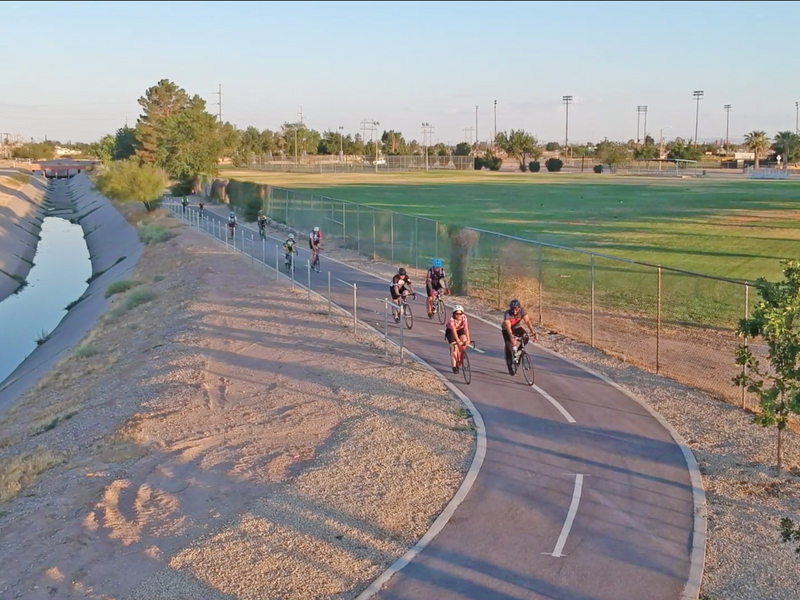
From Tornillo’s cotton fields to Anthony’s pecan farms, the Paso del Norte Trail will connect the region’s changing landscapes across 70 miles when completed, stretching from the western tip of Texas to the New Mexico state line.
Along the Rio Grande in El Paso’s Upper Valley, cyclist and engineer Marty Boyd paused her morning walk on one of the nearly 21 completed miles of trail to pick bright yellow blooms from a Spanish broom, a sun-loving, drought-tolerant shrub that thrives in the desert.
“One of the places where I feel closest to God is here, surrounded by nature and all that He created,” Boyd said. “It’s very spiritual. It gives you a place to pray and be thankful for what we have.”
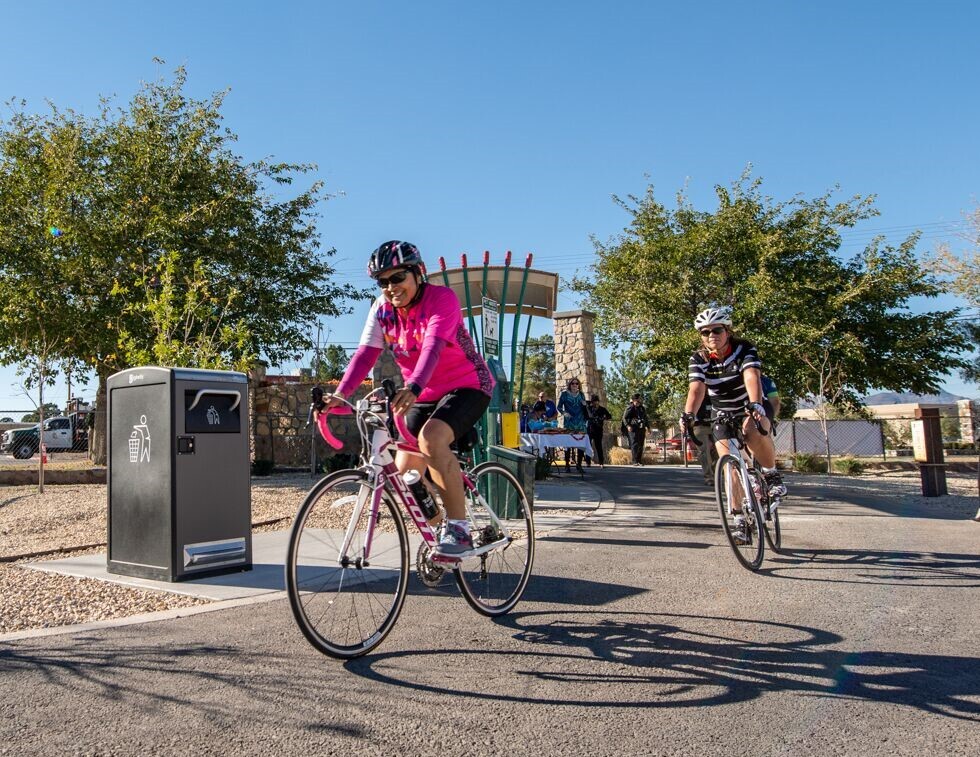
Boyd cycles the trail three to four times a week. She and Samuel Schulte, an engineer who also works on developing the Paso del Norte Trail, go the extra mile on and off the clock as members of Friends of the Trail, a volunteer group that advocates for the trail’s development by pursuing funding for landscaping and amenities.
“So much of our lives can feel isolated and disconnected,” Schulte said. “Places like the trail bring people together. You interact with your fellow El Pasoans and build a sense of community,” Schulte said.
The vision for the Paso del Norte Trail began in the early 2000s with the Rio Grande Riverpark Trail in El Paso’s Upper Valley. Over time, the Paso del Norte Health Foundation expanded the vision to connect communities across the region in partnership with Congresswoman Escobar and regional stakeholders, including the County of El Paso, City of El Paso, City of Socorro, City of Sunland Park, El Paso Metropolitan Planning Organization, and Texas Department of Transportation.
The Health Foundation was driven by the belief that when trails connect neighborhoods, parks, schools, and shopping areas, it becomes easier for people to stay active, live healthier lives, and contribute to a more vibrant region.
“Even small amounts of physical activity make a difference,” Schulte said. “When you can walk or ride in a place that is safe and beautiful, it makes healthy choices feel natural and within reach,” Schulte said.
In 2017, the Paso del Norte Health Foundation began investing in the design and construction of trail segments. Of the planned 70 miles, approximately 21 miles are complete, and 36 miles have secured development funding.
To date, more than $75 million has been secured to advance the design and construction of the trail’s linear spine. Funding is still needed to complete the remaining miles of the trail.
Major trail segments now open to the community include:
-
Rio Grande River Park Trail (11 mi), from the Texas–New Mexico state line to Country Club Road
-
Playa Drain Trail (8.3 mi), from Ascarate Park to Capistrano Park
-
Racetrack to Border Highway West (1.6 mi)
-
Magoffin – San Antonio to Cotton (0.7 mi)
“Like people say, ‘stop and smell the roses.’ I think we need to stop and really look around,” Boyd said.
“I would love the public to experience it. This is part of what we own, all of us in the region. This is ours,” Boyd said.
April 25 is recognized by the City and County of El Paso as Celebrate Trails Day. It offers a timely opportunity to get out and experience the Paso del Norte Trail firsthand. As more miles and new views take shape, the trail reflects the Paso del Norte Health Foundation’s commitment to healthy living, daily physical activity, and stronger regional connections for generations to come.
Learn more about the Paso del Norte Trail by visiting www.pasodelnortetrail.org